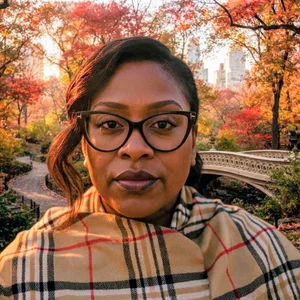
A Personal Story
I was twelve years old the first time I really hated my hands.
I was standing in front of the bathroom mirror in our for-now home in Alabama, trying, again, to make my hair look like something other than proof that I had no idea what I was doing. I'd watched my sisters do this a thousand times. Comb through. Part it. Smooth it down. Twist or braid or pin it into something that looked intentional, something that said, "Yes, I know how to take care of myself."
But my hands? They were traitors.
Every section I tried to part came out crooked. Every stroke of the brush seemed to make things worse instead of better. And when I finally gave up, brushing everything back into a puffy, lopsided ponytail that screamed "I tried and failed", I wanted to cry. Or scream. Or both.
My older sister could do her hair. My younger sister could do her hair. But me? The middle child, the sickly one, the girl already born with crooked feet? I couldn't even manage this one basic thing that every other Black girl around me seemed to know how to do in her sleep.
So I became dependent.
I needed my sisters. Constantly. And they knew it. When my oldest sister got mad at me, she'd call me "crooked foot", her favorite insult, the one that reminded me I was born needing help, born a little broken. And now here I was at twelve, thirteen, sixteen years old, still needing help. Still unable to do for myself what felt like the most fundamental act of self-care.
It wasn't shame I felt. Shame would've been quieter.
It was rage.
Frustration so deep it made my chest tight. Why couldn't I make my brain tell my hands what to do? Why was there this impossible gap between watching something and being able to do it? I felt stupid. Helpless. Like I was failing at being a girl, failing at being Black, failing at some invisible test everyone else had passed without even studying.
We'd left Brooklyn when I was twelve, left behind Miss Sherry's salon on Linden Boulevard, where I'd gotten my first relaxer at age seven or eight. I loved going to Miss Sherry's. Loved the way she'd transform me from ordinary to pretty, from "needs help" to "finished." Loved how I felt walking out of there: polished, done, worthy.
But that was the problem, wasn't it?
I'd learned that being "done" was something that happened to me, not something I could do for myself. And when we moved to small-town Alabama, and there was no Miss Sherry, no monthly appointments, no one to make me feel pretty on command. I was lost.
I stayed lost through high school. Couldn't even braid hair until I was in my twenties.
And then something shifted.
I graduated, and my mother asked me what I was going to do with my life. I told her I didn't want a four-year college. I knew that much. She looked at me and said, "What about cosmetology school?"
I don't know if she saw something in me I couldn't see in myself, or if she was just trying to help her dependent, frustrated daughter find something she could do. But I went. And slowly, painstakingly, I learned. Not just how to do hair, but how to teach my hands to obey my brain. How to turn watching into doing. How to stop being the girl who needed everyone else and become the woman who could stand on her own two crooked feet.
Thirty years later, I'm the one both my sisters call when they need their hair done.
But I never forgot what it felt like to stand in front of that mirror, twelve years old and furious, convinced I'd never figure it out.
And I think about all the girls standing in front of mirrors right now, feeling exactly what I felt.
That's why this work matters.
The Historical Roots: How We Lost Our Hands
This isn't just my story.
It's our story. And it didn't start with me standing in that Alabama bathroom, or with my mother taking me to Miss Sherry's salon, or even with my grandmother's generation.
It started centuries ago, when our ancestors were stolen.
They didn't just lose their freedom when they were shackled and forced onto those ships. They lost their combs, intricate tools carved from wood and bone that had been passed down through generations. They lost their oils, their herbs, their recipes for hair care that were as much ritual as routine. They lost the elder woman who would have taught the young girls how to section, braid, and adorn. They lost the language of our hair.
And in America, they lost even more.
Slave owners shaved heads as punishment, as humiliation, as control. They forbade African hairstyles and grooming practices, calling them "uncivilized." They severed the thread between mothers and daughters, grandmothers and granddaughters, and the sacred passing down of knowledge that should have been our birthright.
So we started over. We improvised. We created new methods with whatever we had, bacon grease, hot combs heated on stoves, kitchen beauticians who did hair in their homes, and passed down what they'd figured out through trial and error. We survived.
But somewhere along the way, survival became dependency.
The beauty industry saw an opportunity and took it. In the 1970s, 80s, 90s, the relaxer era, we were told our hair was too "difficult," too "unmanageable," too much for us to handle on our own. Chemical services required professionals (for safety, yes, but also for profit). Salons became the gatekeepers. And an entire generation of Black women grew up being told, in a thousand subtle and not-so-subtle ways: “You need us. You can't do this yourself.”
Think of it like this: Imagine if someone convinced you that only a licensed electrician could change a lightbulb in your own home. At first, maybe it makes sense. Electricity is dangerous, right? You could get hurt. But then years pass, and you've never learned to flip a switch, check a fuse, or change that bulb. You call the electrician for everything. You pay them every time the lights go out. And eventually, you start to believe you're just not capable of understanding how electricity works.
That's what happened to our hair.
The knowledge got locked away behind salon doors and cosmetology licenses. Marketing campaigns told us our natural texture was a "problem to fix" rather than a crown to tend. And mothers who'd never learned couldn't teach their daughters. The cycle deepened.
We went from women who knew, who carried centuries of ancestral wisdom in their hands, to women who wait. Who sit in salon chairs for hours. Who panics when their stylist cancels their hair appointment on them. Who looks in the mirror and sees a problem they're not qualified to solve.
But here's what they don't tell you: The knowledge was never gone. It was just hidden.
And we're taking it back.
The Cost Beyond Money
Let's talk about what salon dependency really costs us because it's so much more than the $75, $150, $200+ we spend every few weeks.
It costs us time.
How many hours have you spent in salon chairs? Waiting for your appointment. Waiting for your stylist to finish the client before you. Waiting for the relaxer to process, the deep conditioner to set, the silk press to be just right. Add it up over a lifetime. Hundreds, maybe thousands of hours that could have been spent building something, learning something, being something other than waiting.
I think about the women I've met who schedule their entire lives around hair appointments. Who can't go on spontaneous trips because "my hair isn't done." Who turn down opportunities, job interviews, dates, family gatherings, because their hair isn't "ready" and they don't know how to make it ready themselves.
It costs us confidence.
There's something deeply eroding about believing you can't care for your own body. About being forty, fifty, sixty years old and still feeling helpless when you look at your own head in the mirror. It seeps into other areas of life. It’s this quiet voice that whispers, "You're not capable. You need someone else. You can't figure this out."
I've watched women apologize for their hair when it's not freshly done. Wear hats indoors. Cancel plans. Hide. As if their natural state, the hair that grows out of their own scalp, is something shameful that only a professional can make acceptable.
That's not just about hair. That's about worthiness. And it's a lie we've been sold.
It costs us connection.
Think about the tradition we lost. Mothers teaching daughters. Aunties doing nieces' hair on Saturday afternoons. Sisters sitting between each other's knees, talking and laughing while their hands worked through sections and braids. That wasn't just hair care; it was bonding. It was storytelling. It was love made tangible.
But when we don't know how to do our own hair, we can't teach our daughters. We can't sit them down and say, "Let me show you." We can't pass down that ritual, that intimacy, that power.
So our daughters grow up just like we did: dependent. Frustrated. Waiting for someone else to make them feel beautiful.
The cycle continues.
And it costs us our narrative.
When we don't understand our own hair, what it needs, how it grows, why it does what it does, we're at the mercy of whatever the beauty industry tells us. We buy every product they market. We chase every trend they create. We let them define what "beautiful hair" means, what "manageable" looks like, and what's "professional" enough for the workplace.
We give away our authority over our own crowns.
But what if we didn't?
What if we reclaimed the knowledge that was stolen from us? What if we learned to be our own experts, our own first line of care, our own source of confidence?
What if we broke the cycle?
Breaking the Cycle: Your Hair Is a Garden, Not a Problem
This is where everything changes.
For thirty years, I've been doing hair. But more than that, I've been teaching women to reconnect with their own hair, to see it not as a problem that needs fixing, but as a garden that needs tending.
Because here's the truth they don't want you to know: You are capable.
Your hair isn't too difficult. It isn't unmanageable. It isn't beyond your understanding. You've just never been taught. And what's worse, you've been actively untaught. You've been convinced that the natural texture growing out of your own scalp is something foreign, something that requires professional intervention just to exist in the world.
But that's not true.
At Studio HME, I work specifically with women over 40 who've spent decades believing they couldn't do their own hair. Women who've been dependent on salons since childhood. Women who are tired, tired of spending money, tired of wasting time, tired of feeling helpless.
And I teach them what I learned standing in front of that bathroom mirror all those years ago, angry and frustrated and determined to figure it out:
Your hands can learn what your heart wants to know.
That's what my S.A.N.D. Method™ is built on, not quick fixes or miracle products, but understanding. Understanding your scalp. Understanding what your hair needs at this age, in this season. Understanding how to layer nutrients, protect what you're building, and work with your texture instead of against it.
It's education over dependency.
It's empowerment over shame.
And it works.
But I'm not just thinking about the women in my chair right now. I'm thinking about the twelve-year-old girls standing in bathrooms today, trying to figure out why their hands won't cooperate. I'm thinking about the next generation, and whether they'll grow up dependent like we did, or whether they'll grow up knowing.
That's why I'm building the HME Youth Collective, a non-profit designed to catch girls young. To teach them before the industry convinces them they're incapable. To put the knowledge back in their hands where it belongs, so they never have to feel what I felt: angry, helpless, waiting for someone else to make them whole.
We're taking back what was stolen.
Not just the techniques, the birthright. The confidence. The autonomy. The sacred act of a mother teaching her daughter, "This is how you care for yourself. This is how you honor your crown. This is how you tend your garden."
Because when we know how to care for our own hair, we're not just saving money and time.
We're reclaiming our narrative. We're breaking generational cycles. We're standing in front of mirrors and seeing capability instead of helplessness.
We're teaching our daughters that they are enough—exactly as they are, exactly as they grow.
It Starts With One Decision
I can't give you back the centuries of knowledge that were stolen.
But I can give you a starting point.
If you're a woman over 40 who's tired of being dependent, tired of the salon cycle, tired of feeling like your own hair is a mystery you'll never solve, I want you to know … It's not too late.
You can learn. Your hands can remember what your ancestors knew. You can become the woman who tends her own garden, who teaches her own daughters, who looks in the mirror and sees someone capable and strong.
That's what The Ageless Shore™ is about. Meeting you exactly where you are and walking you through the S.A.N.D. Method™ step by step. No shame. No judgment. Just real education from someone who stood where you're standing and found her way through.
And if you have a young girl in your life, a daughter, a niece, a granddaughter, a mentee, imagine what it would mean to teach her now. To break the cycle before it gets another generation in its grip. To give her the gift of confidence and capability before the world tells her she's not enough.
That's the work of the HME Youth Collective. And it starts with us, the women who are healing ourselves so we can heal forward.
This Black History Month, let's honor our ancestors by reclaiming what they lost.
Let's put the knowledge back in our hands.
Let's teach our daughters.
Let's tend our gardens.
Ready to start? Contact me via email at april@hairsmyexperience.com to learn more about The Ageless Shore™ masterclass and join the movement of women who are breaking the cycle, one head, one hand, one generation at a time.